Understanding the Path Toward Your Next Rank
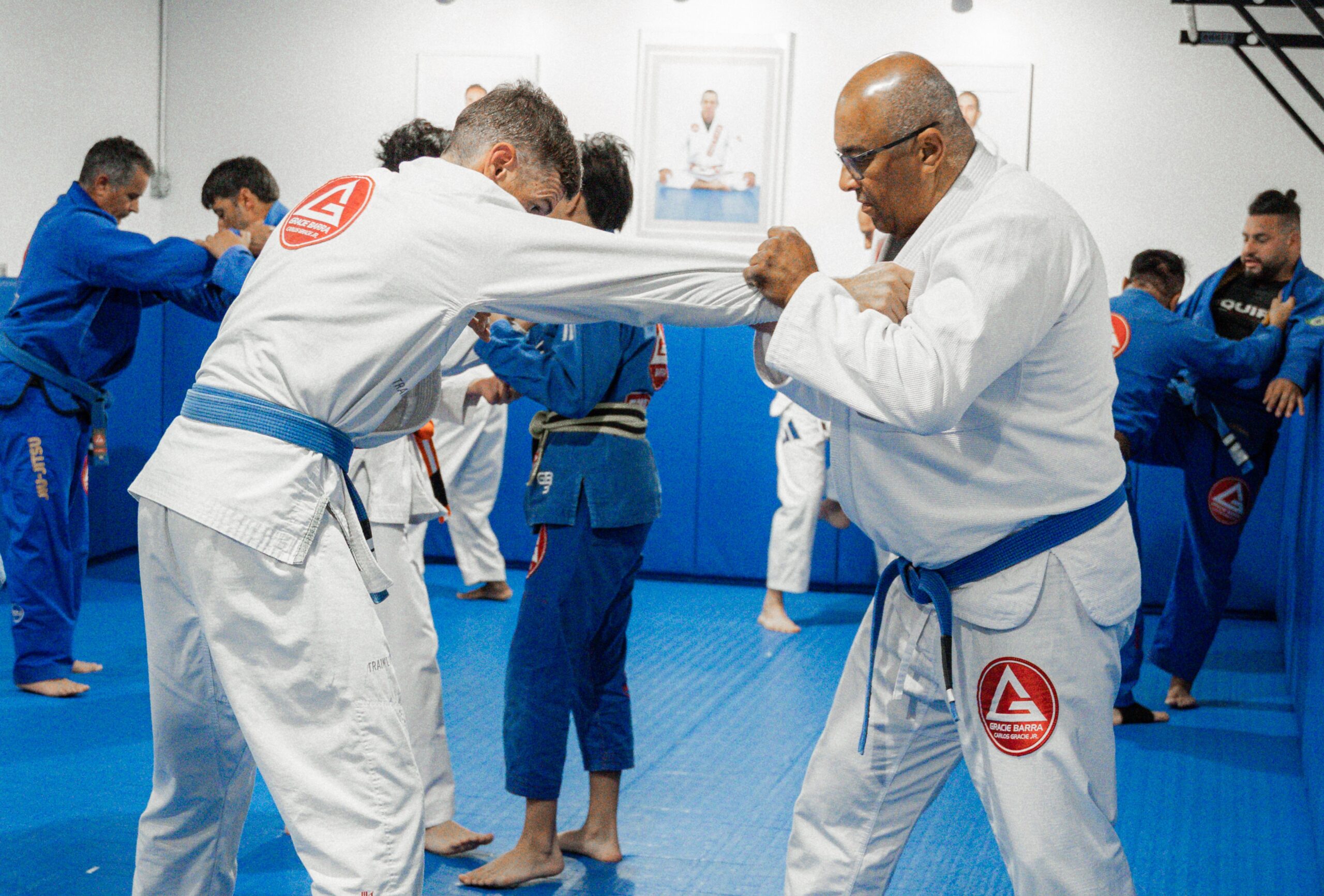
Starting martial arts training demands patience, dedication, and structured practice. For practitioners in South Portland, ME, understanding the formal Brazilian Jiu-Jitsu blue belt requirements gives clear direction for daily mat development. This rank recognizes that a student has developed dependable defensive instincts, solid technical mechanics, and positional comfort under pressure.
Reaching this major milestone generally requires between one and two years of steady, dedicated attendance on the mats. During this timeframe, practitioners learn to overcome physical fatigue through efficient movement and leverage. At Gracie Barra South Portland, our structured approach guides adult practitioners through a clear curriculum designed to support lifelong technical progress and functional fitness.
DISCOVER GRACIE BARRA SOUTH PORTLAND
CLICK HERECore Defensive Skills and Positional Awareness
Defensive capability remains the primary cornerstone for every student working toward rank advancement. Before launching successful attacks, an athlete must demonstrate complete comfort and safety when placed in inferior positions.
Mastering Posture and Base Mechanics
Proper posture provides the main line of defense against upper body control, neck tension, and aggressive sweeps. Practitioners learn how to align the spine, engage the hips, and maintain a centered base inside an opponent’s guard.
Developing balance prevents unexpected disruptions when training partners attempt dynamic off-balancing maneuvers. This composed physical awareness reflects the principles taught in training for working adults seeking steady physical development.
Side Control Escapes and Strategic Framing
Escaping side control bottom requires disciplined forearm frames rather than unmeasured upper body pushing. Students learn to wedge their forearms against the hip and jawline to prevent chest-to-chest compression.
Driving through the heels to create hip space allows the bottom player to slide the knee inside safely. Recovering defensive alignment under sustained pressure demonstrates true comprehension of leverage and space management.
Mount Survival and Hip Movement
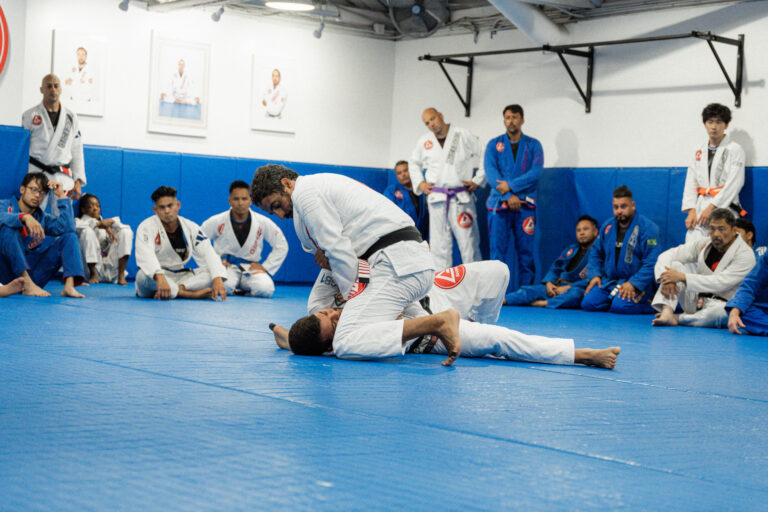
Surviving underneath the mount requires keeping elbows connected closely to the ribcage while protecting the neck. Practitioners systematically practice trapping an attacking arm and foot to execute the classic bridge and roll escape.
When an opponent prevents the roll, transitioning smoothly into the knee-elbow escape restores guard retention. Mastering both escapes ensures the student remains protected without exhausting critical cardiovascular stamina during intense training rounds.
Back Defense and Choke Protection
Surviving back control demands immediate hand fighting to secure the primary choking wrist and protect the collar. Students drill falling toward the non-attacking side to alleviate direct pressure and break the opponent’s hooks.
Shifting the shoulders to touch the floor neutralizes back retention and begins an efficient defensive transition into half guard. Completing these defensive maneuvers proves essential for meeting core Brazilian Jiu-Jitsu blue belt requirements across live rounds.
Essential Movements and Controlled Guard Work
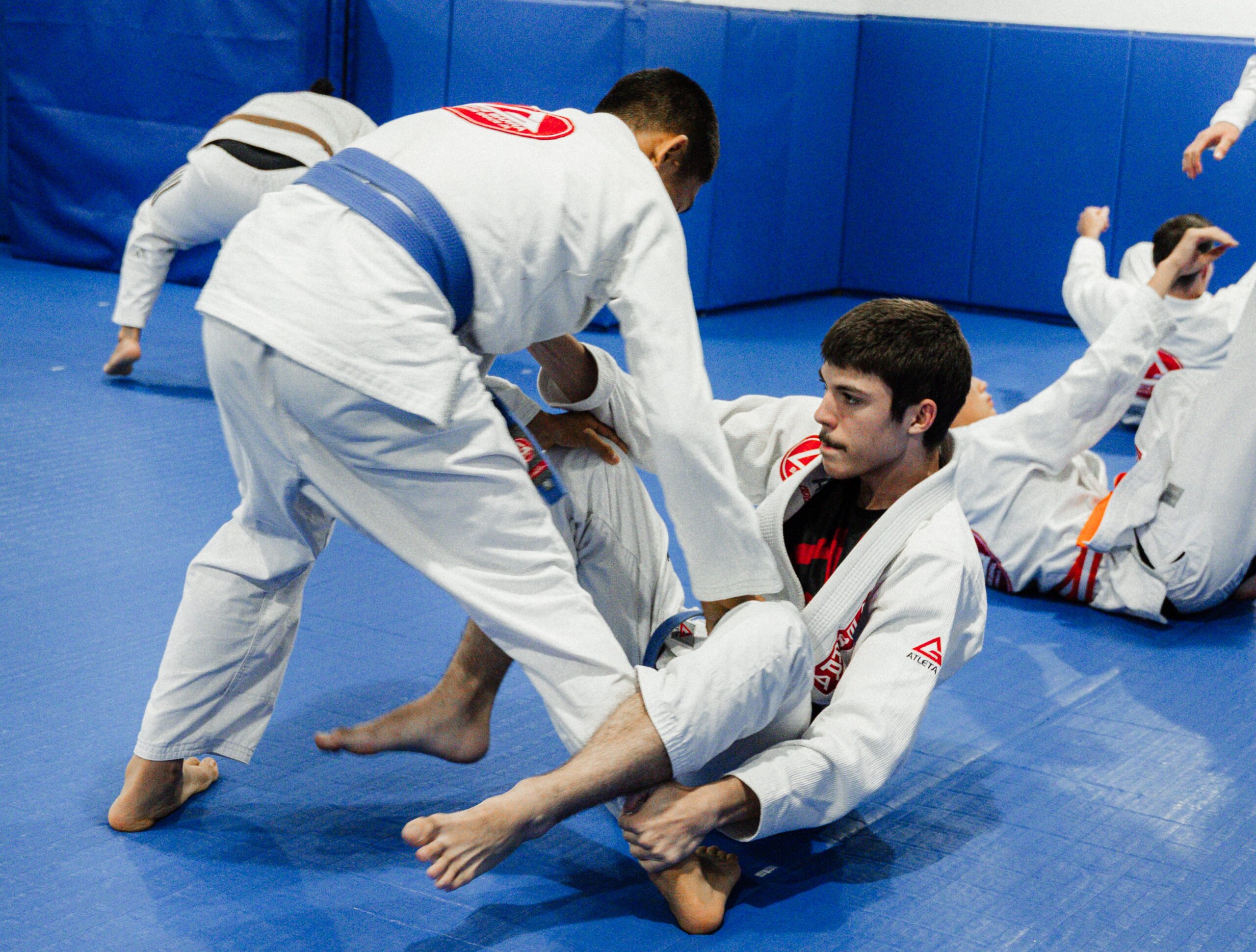
To qualify for promotion, an athlete must demonstrate roughly thirty to forty completed fundamental movements across varied positions. This technical repertoire includes dependable sweeps, methodical guard passes, and precise positional recoveries.
Closed Guard Retention and Posture Control
The closed guard allows bottom practitioners to break an opponent’s balance and control the flow of the match. Using active leg clamping alongside collar-and-sleeve grips prevents the opponent from establishing upright posture.
Maintaining responsive hip movement ensures the legs remain connected even when an opponent attempts to stand. This technical control proves equally valuable during dedicated gi and no-gi sessions throughout the training year.
Fundamental Guard Sweeps and Unbalancing
Reversing bottom positions relies on timing, body connection, and directional leverage rather than muscular strain. Students master the scissor sweep, hip bump sweep, and flower sweep against opponents who maintain distinct postural angles.
Timing the sweep as the partner shifts weight creates effortless transitions straight into dominant mount positions. These mechanics reinforce the practical body dynamics emphasized in self-defense and personal empowerment classes for all adult students.
Systematic Guard Passing Methods
Passing the guard demands steady pressure, hip control, and decisive grip management from top positions. Practitioners learn both standing and kneeling passes to clear defensive legs safely.
Securing dominant side control after the pass requires establishing deep cross-faces and underhooks immediately. Consistent repetition ensures that transitions from the feet to dominant chest-to-chest control flow without hesitation.
Takedowns, Submissions, and Positional Control
A well-rounded practitioner must demonstrate basic competence in standing clinches, ground transitions, and controlled finishing holds. Understanding how these distinct phases interact completes your foundational game plan.
Standing Clinch and Basic Takedowns
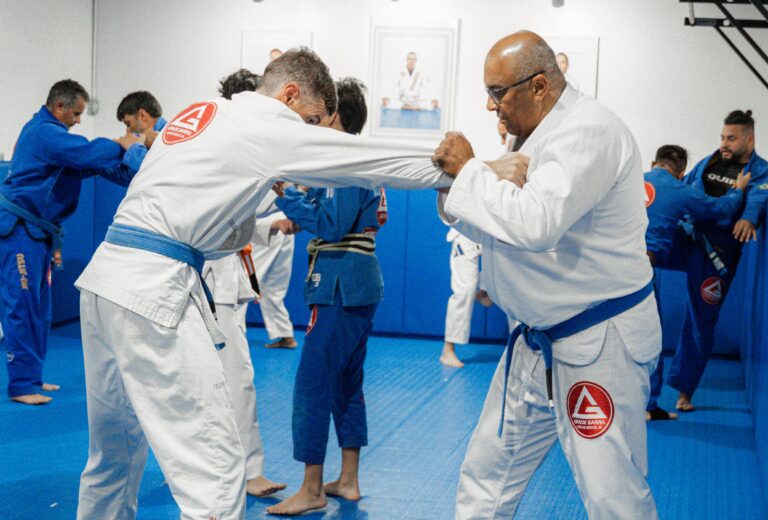
Every match begins on the feet, requiring basic competence in head position, collar ties, and balance breaks. Students practice controlled inside trips, single-leg finishes, and safe defensive sprawls.
Learning to close distance safely protects practitioners from sudden impact during unpredictable encounters. Safe throwing mechanics ensure that both partners land properly without risking shoulder or knee injuries.
High-Percentage Submissions from Top
Applying submissions from mount and side control demands patience, base control, and tight positioning. Students refine the mechanics of the straight armlock, Americana lock, and standard collar strangles.
Executing these finishes methodically allows the practitioner to apply steady pressure without losing dominant position. This disciplined execution protects your training partner while proving total mastery over positional control.
Fundamental Submissions from the Guard
Attacking from the guard proves that technical leverage can neutralize pure physical power. Practitioners study the triangle choke, armbar, and straight cross-collar choke from closed guard setups.
Refining these submission mechanics teaches students how to combine dual attacks simultaneously. These strategic sequences allow students to fulfill critical Brazilian Jiu-Jitsu blue belt requirements through calculated precision.
Technical Orientation on the Mats
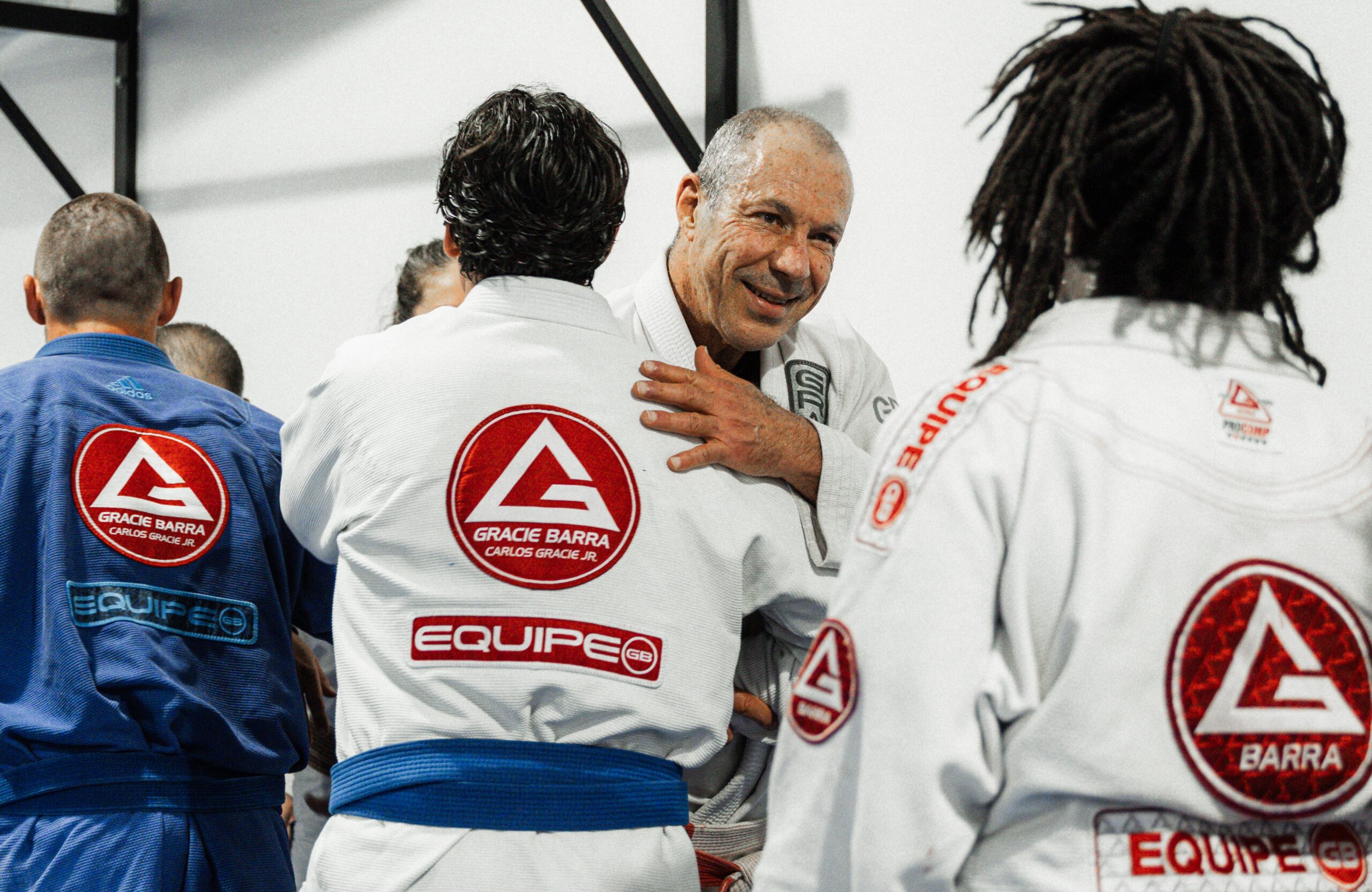
Progressing through the ranks represents an individual journey built on patience, humility, and steady mat hours. Advancing to the next level confirms your ability to remain composed, execute sound defense, and respect your teammates.
At Gracie Barra South Portland, our well-trained instructors follow a detailed curriculum to guide students through each developmental step. Embracing structured training encourages students to enjoy staying active on the mats throughout every season of the year.
Building Mat Consistency and Long-Term Progress
Meeting technical standards requires showing up two to three times per week with an open mindset. Developing muscle memory and positional awareness takes patience, mat hours, and honest feedback from partners.
This steady, patient approach mirrors the focus cultivated in supportive youth training programs across our local community. Cultivating emotional composure under pressure creates athletic resilience that extends far beyond physical sport.
DISCOVER GRACIE BARRA SOUTH PORTLAND
CLICK HEREEmbrace Your Martial Arts Journey Today
Meeting the Brazilian Jiu-Jitsu blue belt requirements marks the completion of your initial foundation in grappling. Committing one to two years to learn thirty to forty core movements builds functional strength, sharp thinking, and dependable self-protection.
We invite adults throughout South Portland, ME, and nearby coastal communities to discover the transformative impact of mat training. Stepping onto the mats at Gracie Barra South Portland gives you a welcoming environment to build discipline and practical athletic confidence.